Investors
and developers say OZs are an essential tool for new development in an
inflationary environment. Now they are permanent.
NATIONAL
REPORT — While it took a few years for Opportunity Zones to become fully
utilized for hospitality assets, developers and investors say it’s been a
welcome tool in a challenging post-COVID inflationary environment for new
developments. They also say it takes a certain type of investor.
“This tool
is great for investors who are willing to be patient,” said Natalie Mason,
co-head of development for Glen Allen, Virginia-based Capital Square, which has
several Opportunity Zone (OZ) multifamily investments and recently completed its first hospitality
OZ investment, The Nickel Hotel in Charleston, South Carolina, which opened in
June. “It is not a tool for investors who are looking for distributions in the
short term or looking to exit the investment in the short term.”
Opportunity
Zones were created as part of the Tax Cuts and Jobs Act of 2017, which
designated low-income census tracts as Qualified Opportunity Zones (QOZs). A
real estate investor or hotel developer can obtain tax benefits in several
ways: by deferring the payment of taxes on capital gains until the asset is
sold, with greater benefits the longer the asset is held and maximized
after 10 years. Due to the investment required, most OZ hotel deals are for new
buildings, although adaptive reuse is also a viable option.
The original
legislation had an expiration date at the end of 2026, but the One Big
Beautiful Bill that passed earlier this month makes OZs permanent, while
introducing key changes, notably including more rural areas in the new OZ map,
which will be based on the 2020 census and announced next summer.

We have found it a great source of raising capital. It allows tax perks for investors and is unprecedented… It’s a really powerful tool.
Natalie Mason
Mason said
it took a couple of years for developers to understand the OZ program fully and
for some regulations to be issued. But since then, it has taken off.
“We have
found it a great source of raising capital. It allows tax perks for investors
and is unprecedented… It’s a really powerful tool,” she said.
Mason also said
that compared to other tax incentive investment tools, it’s much easier to use.
“Opportunity Zones are
essentially a buy-right tool. As long as you follow the rules and you submit
the correct tax paperwork… you don’t have to interact with any local government
or any federal government agency.”
Essential
tool for developers
Will
Woodworth, senior vice president of investments for Atlanta-based Peachtree
Group, said the company has made 20 hotel investments in OZ projects. Peachtree initially used a couple of different funds but is now just making
individual investments. Deal sizes have ranged from $15 million to $100
million.
With the
cost of development rising some 30% to 50% since 2019, Woodworth said Opportunity
Zones have become an essential tool for new development.
“Maybe in
2017, the creation of this program had developers seeing dollar signs in their
eyes about how lucrative it could be,” he said. “But it became a critical
vehicle to be able to develop, period. Your investor base may have a slightly
different motivation, so their return expectations may be slightly lower. That
takes that pressure off of the cost that’s going into the project to be able to
get it done.”
Although
many of the zones are in areas in need of development, Woodworth said the
demand drivers still need to be present for the hotel to be successful.
It became a critical vehicle to be able to develop, period. Your investor base may have a slightly different motivation. So, their return expectations may be slightly lower. That takes that pressure off of the cost that’s going into the project to be able to get it done.
Will Woodworth
“That’s real
estate 101 and hotels 101, that the hotel never wants to be the first mover.
You want to be the guy to show up and soak up all the demand that’s been built
up around you,” he said. “That’s really what it’s translated to for us -- threading that needle where these are areas that this works better for hotels a
lot of times than it does for multifamily.
“We’ve seen
plenty of deals where we say, this is an OZ, but there’s nothing around it. How
do you justify it? It still has to make sense. There can’t be any sort of
smoke and mirrors and tax incentives that make you do a deal that doesn’t make
sense.”
The capital
stack can also be different for these types of deals, notably with LTVs well
below 65%, Woodworth said.
“It’s
investor appetite driven, and largely we are going in at lower leverage points
with these. So, instead of having 65% as your loan amount for your project,
we might be going in at 40%,” he said. “Some of that is… Opportunity Zones are called that for a reason. These aren’t blue-chip markets. So, the last
thing you want to do is have a project that might be a longer ramp and you’re
exposed on the debt side of having to deal with the lender.”
Having lower
leverage can also create liquidity opportunities for investors, Woodworth said.
“The assets
are going to be tied up for 10 years. Suppose you go in at a lower leverage
point, initially, once you ramp up... you can refinance and
potentially return some capital to the investor, versus if you go
in with 65% leverage, it’s going to be hard to get a lot of money out of the
deal at that point,” he said.
While the
hold time can sometimes be an issue for developers, Woodworth said, OZ deals,
by their nature, attract investors who are in it for the long haul.
“Sometimes
you build a really good asset and you want to sell it immediately but you are a
little bit beholden to that tax structure. So, you have a way out. Do I sell
now and take tax liability, or do I wait it out?” he said. “But in the spirit
of the program, you’re looking for markets that are going to have long-term,
outsized growth. You’re not trying to make a quick buck, so to speak, because
the interest of the program is to revitalize communities.”
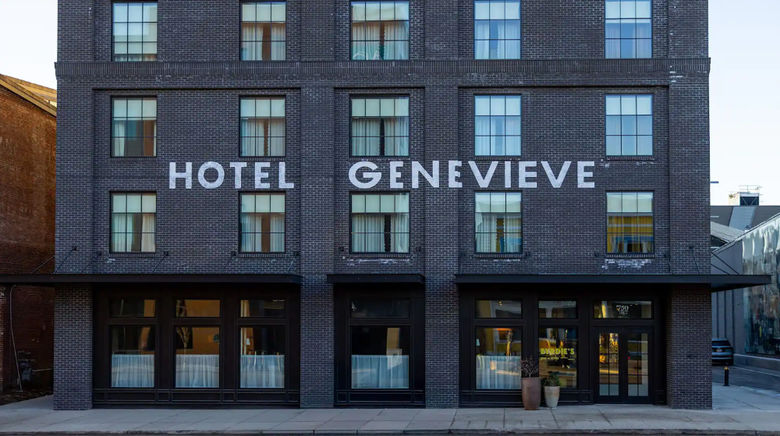
Mountain Shore Properties' Hotel Genevieve in Louisville, Kentucky was an Opportunity Zone investment.
‘An extra
incentive’
Stephen
Wendell, CEO of Charleston, South Carolina-based Mountain Shore Properties,
said his company has made several OZ deals, including the Hotel Genevieve in
Louisville, Kentucky.
“It’s just
an extra incentive. But that’s maybe a product of how we develop and how we
look at things. We’re a little bit stricter,” he said. “Like it made [our
underwriters] a definite yes, whereas it was a maybe, or it was close. But a
definite yes in today’s world is extremely important because it gives you the
conviction to move forward.”
Wendell said
the real carrot is the benefit 10 years down the road.
“The tax
deferral is great, but you want to take advantage of… building the
thing. You’re building a nice thing and you want to [own it] for 10 years
because you want to get that depreciation down to zero. Then you sell it, and
then you avoid depreciation recapture. You get a massive tax windfall in 10
years. That’s a long time in the world of investing today.”
An OZ deal
also incentivizes developers to do the right thing for the property and the
area.
“They have to hold it for 10 years to maximize [the investment] and so what that ends up
doing is you make decisions properly on the front end,” Wendell said. “If I’m going
to own it for 10, I might as well think about owning it for 20. You build nice
things, you do nice things, and that should benefit [everyone]… Not
everyone does things the right way.
“You are making medium- to long-term decisions
every time something happens with your asset and that’s better for the
investors, better for the tenants and better for the city that you’re
developing in.”