International
development executives discuss the company’s recent Super 8 deal in Saudi
Arabia, as well as APAC and Latin America development trends.
LAS VEGAS — Wyndham Hotels & Resorts has been
making news recently with high-profile deals for its economy brands
internationally, notably with a recent deal to develop 100 of its Super 8 brand
in Saudi Arabia in the next 10 years and a deal last October to open 40 Microtel
hotels in India in the coming years.
That’s the reverse of the trend
happening in the U.S., where Wyndham has a substantial foothold in the economy
space and has been creating or acquiring brands to move into higher segments.
Dimitris Manikis, president of
EMEA (Europe, the Middle East, Eurasia — which includes India, Bhutan, Nepal,
Sri Lank and the Maldives — and Africa) for Wyndham Hotels & Resorts, said
the company has been successful, especially in his region, in getting into what
the company calls the “premium economy” space.
Manikis spoke to Hotel
Investment Today as part of Wyndham’s 2025 Global Conference last week in
Vegas. He was joined by two other regional presidents: Joon Aun Oi, president
of APAC and Gustovo Viescas, president of LATAMC.
Manikis said economy brands are
perceived differently worldwide, especially in the last five years.

What we see with Super 8s and the Days Inns and the premium economy brands is that the same guy who will stay in a Raffles a week later can stay in a Days Inn or a Super 8.
Dimitris Manikis
“After COVID, I’ve seen a great
shift in travel patterns. In the past, we used to put travelers into boxes and
segments and say… they travel this way, so that’s how we sell to them,” he
said. “What we see with Super 8s and the Days Inns and the premium economy
brands is that the same guy who will stay in a Raffles a week later can stay in
a Days Inn or a Super 8.”
Ownership changes are
facilitating these changes, Manikis said, especially in Europe, where
individual owners are becoming rarer and institutional owners like BlackRock,
Blackstone, TPG Angelo Gordon or other private equity firms, hedge funds or big
insurance companies are embracing economy as an up and coming space to invest into.
“For them, it’s EBITDA-driven
and segment-driven. It’s not like it is here in the United States,” he said.
“They are the new owners of hospitality. You have to address them in a
different way. You have to speak to them in a different language.
“They’ve started to see that
economy, and premium economy, now is actually the next big thing, but they do it in a different way.”
Manikis said that having strict
brand standards that work in the U.S. often doesn’t work internationally, and
you have to adapt to local needs.
“If we were so strict [and say]
these are the brand standards and this is what you build, we wouldn’t have an
audience to listen to,” he said. “Because we are so flexible and because
we are so open to listening to what the market needs, that’s why you see all
this growth now in premium economy.”
Manikis said the plan for Super
8s in Saudi Arabia is simple: pre-fabricated hotels that can be built in six
months, have a lean labor model and are operationally easy to manage and
maintain.
“So, the guys that we’re doing
business with in Saudi Arabia… they will build them in factories,” he said.
“You only need the base. They will build it modularly and will be put
[together] in six months. In six months, you will have a 50- to 60-room hotel on the
outskirts of Riyadh or Dammam or wherever. That is the beauty of the model
there.”
Manikis emphasized that speed is
the most important element for Saudi Arabian investors.
“We’re building smart, clever,
cost-efficient and fast,” he said. “With the way the market is growing… You have to be fast. They need thousands and thousands of rooms in that premium
economy space and that’s exactly where we come in. They are completely
saturated in luxury. Every single luxury brand is in Saudi Arabia. We saw a
niche in the premium economy and that’s exactly where we’re doing.”
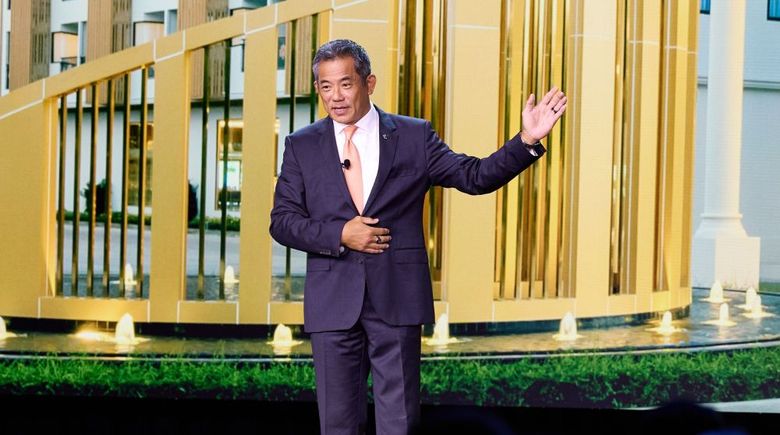
Joon Aun Oi is president of APAC for Wyndham.
Growth in Asia
Pacific
Joon Aun Oi said Wyndham also
has premium economy strategies in Asia Pacific that aren’t so much predicated
on a shift in demand but more about trying to take market share from local players.
“We’re trying to capture or
steal away the demand that’s existent because a lot of it is dominated by local
players,” he said. “Consumers are looking for a trusted brand, clean room, good
safety, and someone they can complain to that will listen. It’s based on
hitting the budget economy segment because the demand is really there. We’re
just trying to take it from the local players.”
Wyndham said during its
first-quarter earnings that demand in China is steady, but RevPAR declined 8%
year-over-year. Joon Aun Oi said he still sees a lot of reasons to be
optimistic for the rest of 2025.
“The growth is there still… but
if you look at the statistics of number of hotel rooms per capita, China is
still markedly lower than established markets like USA,” he said. “So, the
opportunity is still humongous.
“We are cautiously optimistic
and seeing positive improvements throughout the remaining part of the year.
That is aided by a few factors… inbound travel is increasing recently…
and flight capacity is getting better and better. So, we’re seeing more and more
inbound tourism.”
Latin American
development
Viescas said the strategy for
conversions is extremely important in the Caribbean and Latin America because
so many hotels in the regions are independent.
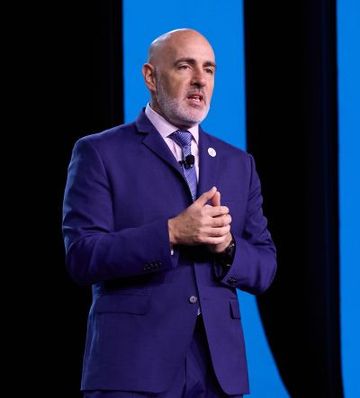
Gustovo Viescas is president of LATAMC for Wyndham.
“They need a big brother because
it’s almost impossible to be independent and aware of and connect with all the
changes that are happening really fast,” he said.
When approaching an independent
hotel about converting to Wyndham, Viescas said he uses a very specific
strategy.
“Our first strategy is… instead
of saying, I want this brand in this city, [we ask] which is the brand that
fits better for this project with the main purpose of avoiding doing a large
rebuild for this property,” he said. “If the owner wants a higher brand, we are
going to accept the request. But our first approach is that, and it’s about the
conversation with the owner and I’d love to make the owner feel that he has the
brand that he wants for his property.”
Viescas said, unlike in Europe,
that usually means an individual owner as opposed to an institutional one.
“In Latin America, all the
hotels are mainly independent and family offices… So, it’s a good one-on-one
conversation with the owner to say, let’s find something in the middle to make
[them] happy,” he said. “For most of them, having a hotel is not just the city
having a place to receive receiving people. For some of them, receiving guests
in their hotels is like receiving people in their own house.”
Editor's note: Wyndham paid for some of the expenses for the reporter's trip to this conference, but it did not influence coverage of this event or future coverage about the company.