With exacting standards and elite membership, hospitality
networks give independent hotels credibility, visibility and scale.
GLOBAL REPORT – When husband-and-wife team Sally and Nick
Cooper started managing The Cove Eleuthera last year, they had no idea who
among their guests might be conducting a secret inspection.
The 22-room Bahamas property was being evaluated for
membership in Relais & Chateaux, the luxury hospitality network known for
its boutique and culinary-forward positioning. For weeks, the Coopers wondered
which visitor would determine if The Cove would make the cut.
The answer eventually came in the inspection report. While
it didn’t identify the inspector, the document provided enough clues for the
Coopers to make an educated guess. Sally Cooper said the undercover guest had
experienced the property’s snorkeling excursion — featuring an unusually high
number of turtle sightings that day — and tasted their chef’s elevated version
of guava duff, a steamed pudding that serves as the Bahamas’ national
dessert.
“Their eyes rolled into the back of their head when they had
a mouthful,” she said.
This past March, The Cove Eleuthera was named the sole
Relais & Chateaux property in the Bahamas.
The Coopers’ journey is reflective of a larger trend, as
independent hotels and resorts seek to partner with established hospitality
networks that lend credibility, visibility and scale.
Aligning with these network brands — including Preferred
Hotels & Resorts, Small Luxury Hotels of the World, Leading Hotels of the
World and Relais & Chateaux — has become critically important for many
smaller operators. Just as the major hotel chains have aggressively expanded
via both hard brands and soft brands, these networks have simultaneously been
in growth mode, offering an alternative path to autonomy with global scale and,
in many cases, access to a broader loyalty program.
“The global reach that we give to hotels is so important,”
said Michelle Woodley, president of Preferred Hotels & Resorts, which was
established by 12 hoteliers in 1968 and today has more than 600 member
properties.
Preferred’s value proposition also hinges on cost and
flexibility. A Preferred performance study by hospitality consulting firm HVS
examined 98 Preferred-affiliated hotels from 2022 to 2024 and found that
Preferred charges members less than 1.7% of gross rooms revenue on average,
compared to roughly 11% or more for hard brand affiliations.
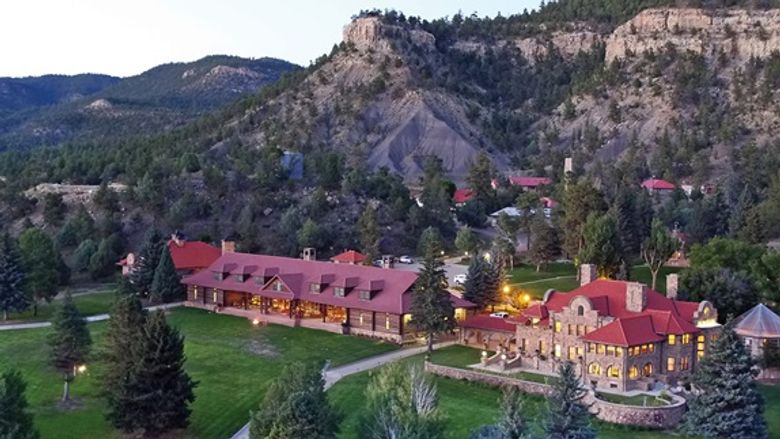
Vermejo, a Ted Turner Reserve is a member of Preferred Hotels & Resorts’ Beyond Green brand. (Credit: Beyond Green)
“And we don’t come in and slap down a book of SOPs,” said
Woodley, referring to standard operating procedures, or requirements that
hotels are required to follow to be included under a brand flag. “How they
check guests in, what their team wears — that’s all up to them, as long as they
meet the standards.”
How network brands define those quality standards while
still allowing for a high degree of independence varies. Preferred’s emphasis
is on what Woodley calls “soft factors,” measured through a quality assurance
program that combines “secret shopper” inspections with aggregated review data
from 187 websites. “We’re focused much more on service, and it’s really those
‘soft factors’ that make the difference,” Woodley said. “Because that’s what
the guest really remembers, right?”
For Small Luxury Hotels of the World, which celebrated its
35th anniversary this year and has roughly 650 properties, a simple standard is
size. Its members average 49 rooms, said COO Richard Hyde. Each hotel also is
expected to pass an inspection process.
“And it’s almost a given, being small and luxury, that [a
property] needs to be of a good standard,” said Hyde, adding that member hotels
tend to play in the 5-star and 4-star-plus space. “But it’s hard to put a
luxury label on them in a traditional sense. The key thing is that they’re
individually spirited, they’re kind of quirky and they’re full of character —
that’s what we tend to go for. The luxury really is in the experience.”
For Relais & Chateaux, it’s not only a high-end,
boutique positioning but also culinary standards that are paramount. (The
network also represents standalone restaurants.)
“As a hotel, you are inspected on the culinary aspect of
your property very seriously,” said Richard Delany, president of the Old
Edwards Inn in North Carolina, adding that Relais has more Michelin stars than
any other association.
Relais also touts its operating model as a key
differentiator within the network brand space. Members vote on another member
property owner or operator to be president for a five-year term. It also has a
board representing different regions that is voted in by other members; it
meets at least three times a year in person and multiple times online to
discuss group governance.
“Decisions are made based on what the members want,” said
Delany, who is Relais’ North American delegate. “We are an association where
everyone gets a say.”
Meanwhile, Leading Hotels of the World, which is approaching
its 100th anniversary, operates under a co-op model, with all membership fees
funding operations rather than generating profit. The network, which focuses on
the 5-star luxury segment, has more than 400 members.
“We’re not making money off of these hotels,” said Leading
Hotels CEO Shannon Knapp. “The mission for Leading Hotels of the World is to
empower independent hoteliers to stay independent. We’re investing every dollar
that comes in into achieving that mission.”

The global reach that we give to hotels is so important.
Michelle Woodley
Knapp said the organization is highly selective, receiving
around 600 to 700 membership inquiries annually but accepting only about 5% of
those applicants each year.
Knapp said interest in joining a network like Leading Hotels
has spiked since the pandemic.
“We’ve seen more deflaggings [among] hotels over the last
five years than in the 10 years before,” she said. “I think COVID was a tipping
point for some, but when you do the math, as an owner of a hotel, on how much
it costs for you to have a brand versus how much it costs to work with one of
the collection brands, it’s significantly less expensive and requires [less]
top-line revenue growth to drive the same or better profit.”
Finding common ground
As they grow, network brands are evolving.
Earlier this year, Small Luxury Hotels launched its
Wellbeing Collection of properties focused on holistic wellness experiences
beyond the spa. For example, member property Oasyhotel in Italy’s Apennine
Mountains offers forest bathing, wild swimming and starlit meditations in a
wilderness reserve.
The Wellbeing Collection debuted with 15 members and joined
three other existing Small Luxury Hotels collections: the environmentally
focused Considerate Collection, with just over 80 properties; the Private
Collection of properties with more private, residential-style accommodations;
and the Finest Collection, which features top-tier “destination” properties.
Preferred has similarly diversified. Since 2007, parent
company Preferred Travel Group has managed the Historic Hotels of America
network, comprising nearly 300 properties that are 50 years or older and are on
or qualify for the National Register of Historic Places. In 2012, an
international iteration known as Historic Hotels Worldwide launched and now has
nearly 500 properties.
In 2020, Preferred unveiled Beyond Green, a standalone brand
with a global portfolio of sustainably minded properties that must meet
standards based on their impact on nature, community and local culture, Woodley
said. The network now has 65 hotels and resorts.
Jade McBride, president of Ted Turner Reserves, said the
partnership with Beyond Green has been “critically important and extremely
valuable” to the 558,000-acre ranch Vermejo, a Ted Turner Reserve in New
Mexico.
So valuable, in fact, that after briefly departing the
network in 2023 due to outside factors, the ranch rejoined this year, with
McBride citing Beyond Green’s sales and marketing muscle as a driving
force.
“We can now get by with a much smaller sales and marketing
team, because we have these partners helping support us,” McBride said. “And
that sales and marketing engine extends beyond just Beyond Green — it’s cross
promotions [with other members], sharing newsletters and simple things like
liking and sharing each other’s posts on social media. Those are really
powerful things for us.”
Andrea Lowe, director of sales and marketing for Wymara
Resort + Villas in Turks and Caicos, also spoke to the importance of the reach
a small property like Wymara gets from being a Leading Hotels member.
On its own, Wymara couldn’t easily attend important luxury
travel industry events like ILTM, but Wymara reps are there as part of the
Leading Hotels contingent. Lowe also attended Signature’s conference in Las
Vegas last month with the Leading Hotels team. “We greatly value our
partnership with [Leading Hotels] and are immensely engaged with their events,”
Lowe said, adding that the partnership gives the resort “instant credibility
among these luxury travel networks.”
New networks are also jumping into the space. The Set
launched as a brand affiliation company in 2021, pivoting from hotel
operations. Its portfolio of 12 properties, including Round Hill Hotel &
Villas in Jamaica and The Upper House in Hong Kong, is focused on having one
hotel per destination and building what Robin Stangroom, The Set’s CEO, calls a
“constellation of properties which are very carefully curated. We want to keep
it quite niche, focusing on quality, not quantity.”
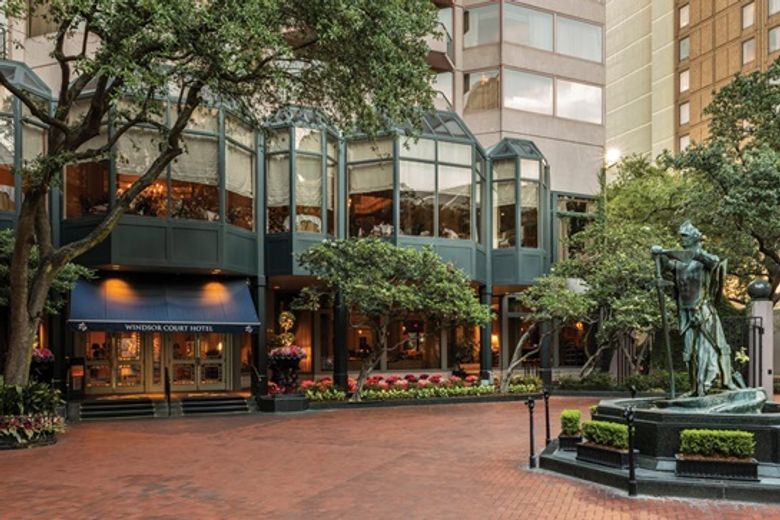
The Windsor Court in New Orleans is a Preferred Hotels & Resorts member. (Credit: The Windsor Court)
The Set is also focused on creating connections. The brand’s
inaugural summit in London last month brought together brand partners and
suppliers for panels, presentations and an event with the London Philharmonic
Orchestra.
“Of course, we want people to have come away learning
something,” Stangroom said. “But most importantly, we want to enrich, inspire
and entertain people as well. The spirit of collaboration is our north star.”
This emphasis on relationships resonates with Ralph Mahana,
general manager of the Windsor Court in New Orleans, a Preferred member.
“The genuine care that they have for the people on property
and the hotels themselves is second to none,” Mahana said of Preferred’s
approach.
Preferred’s network has provided crucial support throughout
Mahana’s career. Starting as a valet at the Windsor Court in 2006 before moving
up, he leaned heavily on Preferred’s guidance when he took the reins as GM in
2018.
“Preferred always was invested in this relationship with me,
personally, to be successful,” Mahana said. “They genuinely cared about when I
was this kid who just became general manager and didn’t know how to navigate
those waters.”
Network loyalty
Independent properties have long turned to network
affiliations for support, but even more established smaller hotel chains are
recognizing the value of alliance models as they compete against hospitality
giants like Marriott International, Hilton and IHG Hotels & Resorts.
Minor Hotels, which operates 12 brands including Anantara,
NH Hotels and Avani, joined the Global Hotel Alliance more than 20 years ago
when Minor had fewer than 10 properties.
“We recognized that loyalty was critical for us, but for us
to launch our own loyalty program, we didn’t have enough of a scale,” said
Dillip Rajakarier, CEO of Minor.
Today, Minor has grown to over 600 properties and is
Global’s largest member by hotel count. But the company continues to value the
alliance’s model, which Rajakarier said gives Minor access to nearly 30 million
loyalty members across its combined member brands.
Founded in 2004 by member brands including Kempinski and Pan
Pacific, Global was directly inspired by the success of the airline world’s
Star Alliance, said CEO Christopher Hartley.
“We felt that if we were going to survive in the world of
independent hotels in the 21st century, in a world that was digitalizing,
collaboration was the best approach,” he said.
The alliance now encompasses about 30 brands and nearly
1,000 hotels, with members able to earn and redeem Discovery Dollars across the
entire portfolio. Members’ flags include Capella and Marco Polo as well as
newer additions like the Cinnamon Hotels & Resorts portfolio in Sri Lanka
and the Maldives.
For Hartley, Global’s network represents essential
infrastructure for competing in today’s landscape.
“I don’t think anyone is advocating that if you’re a hotel,
you should have your own [loyalty program]; and even if you have 100 hotels,
good luck,” he said. “If you want access to a global audience, you’re going to
have to be part of something bigger.”
Note: This story originally ran in Travel Weekly